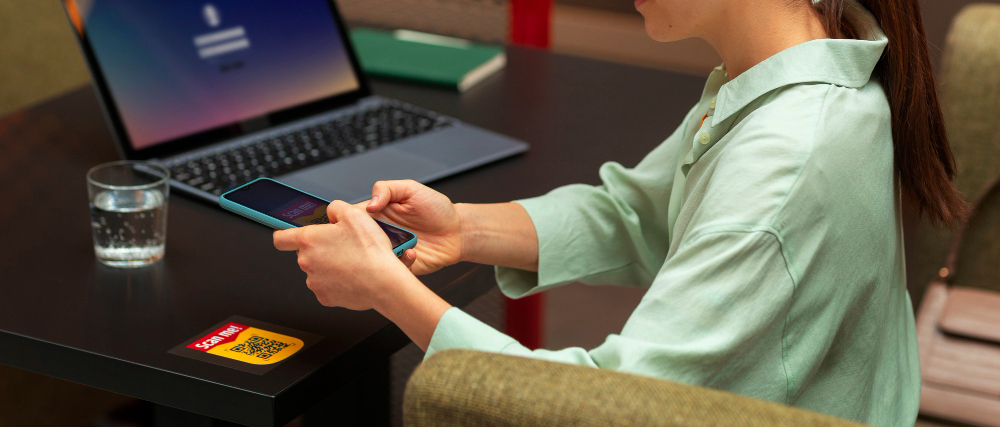
How to Create a QR Code for Your Restaurant Menu in 2026 (Complete Strategic Guide)
In 2026, the QR code menu is no longer a novelty — it’s an expectation. Customers walk into a restaurant assuming they can instantly scan and access a fast, beautifully designed digital menu on their phone. But here’s the truth: Generating a QR code takes 30 seconds. Building a high-performing, revenue-optimized digital menu system takes strategy. This guide explains exactly how to create a QR code for your restaurant menu the right way in 2026.
Why QR Code Menus Are Still Dominant in 2026
Despite predictions that QR codes were “temporary,” they’ve become permanent infrastructure in modern restaurants.
Why?
Because they solve real operational and marketing problems:
Instant price updates
Seasonal menu flexibility
Multi-language support
Zero printing costs
Mobile-first browsing
Integrated customer analytics
In 2026, QR codes are no longer about safety.
They’re about efficiency, branding, and performance.
Step 1: Build a Mobile-First Digital Menu (Not a PDF)
The biggest mistake restaurants still make in 2026:
Uploading a PDF and converting it into a QR code.
That’s not a digital menu.
That’s a static document behind a QR code.
A modern interactive menu must be:
Designed specifically for smartphones
Fast-loading (under 2 seconds)
Structured into clear categories
Visually immersive
Optimized for conversions
With a no-code platform like PixPlat, restaurants can:
Use drag-and-drop editing
Apply premium restaurant templates
Add high-quality dish photos
Customize typography and branding
Preview the mobile experience in real time
The QR code should lead to an experience — not a file.
Step 2: Use a Dynamic QR Code (Mandatory in 2026)
There are still two types of QR codes:
Static QR Code
Fixed URL
Requires reprinting if the link changes
Dynamic QR Code (Industry Standard)
Content can be updated anytime
QR code remains the same
Supports tracking and analytics
Essential for restaurants
In 2026, using a static QR code is outdated.
A smart QR code system allows you to:
Change prices instantly
Remove sold-out items
Add seasonal promotions
Update design without reprinting
PixPlat automatically generates dynamic QR codes linked to your digital menu, ensuring real-time flexibility.
Step 3: Design the QR Code Experience (Branding Matters More in 2026)
Today’s customers expect cohesive branding.
Your QR code should:
Include a call-to-action (“Scan to View Our Menu”)
Match your restaurant’s design identity
Be placed strategically on tables
Be printed in high resolution
Include subtle brand elements (logo, color accent)
Luxury restaurants in 2026 integrate QR codes into:
Premium table displays
Custom acrylic or wood stands
Minimalist branded cards
The QR code is no longer technical.
It’s part of your visual identity.
Step 4: Test Performance & Speed
Restaurant guests are impatient.
If your menu takes more than 3 seconds to load, you lose attention.
Before launch, test:
Loading speed
Scroll fluidity
Readability
Android/iOS compatibility
Wi-Fi vs mobile data performance
Ask yourself:
Is this smoother than flipping a physical menu?
If not, optimize it.
Step 5: Turn Your QR Code Into a Data Engine
In 2026, restaurants compete on data.
A professional digital menu platform allows you to track:
Total visitors
Most viewed dishes
Customer likes
Behavioral insights
Engagement time
This enables you to:
Highlight high-margin dishes
Reorder menu sections strategically
Test pricing adjustments
Optimize layout based on performance
A QR code without analytics is just a shortcut.
A QR code with insights is a growth tool.
Common Mistakes in 2026
Even now, many restaurants:
Still use static QR codes
Link to PDFs
Ignore analytics
Neglect design
Fail to update menus regularly
The result?
A digital experience that feels outdated.
In 2026, customers can instantly recognize a low-quality system.
Why Restaurants Are Moving to Specialized No-Code Platforms
Free QR code generators:
Don’t provide analytics
Don’t offer design flexibility
Aren’t built for restaurant operations
Provide zero optimization tools
Modern restaurants need:
Drag-and-drop editing
Premium templates
Dynamic QR codes
Integrated analytics dashboard
AI-assisted updates
PixPlat combines all of this into one streamlined platform designed specifically for restaurant digitalization.
Instead of managing multiple tools, everything lives in one smart ecosystem.
Final Perspective: In 2026, QR Code = Infrastructure
The QR code itself is simple.
The competitive advantage comes from what’s behind it.
A successful QR code menu in 2026 is:
Mobile-first
Design-driven
Data-powered
Real-time editable
Built on a no-code platform
Restaurants that treat their digital menu as a strategic asset outperform those that treat it as a temporary solution.
🚀 Ready to Build a Smart QR Code Menu for 2026?
Discover how PixPlat transforms a simple QR code into a premium digital experience designed for modern restaurants.
Start for free and create your mobile-first digital menu in minutes — no developers, no complexity, just powerful design and smart performance.