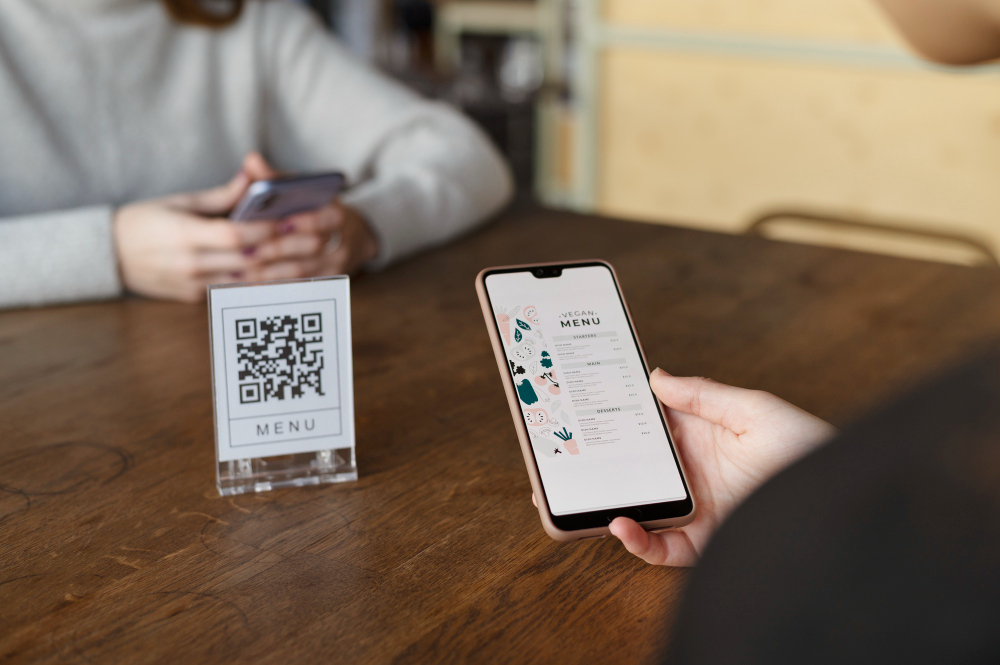
QR Code Menu: Strategic Advantages for Modern Restaurants in 2026
The QR code menu is no longer a temporary trend born during the pandemic. It has evolved into a strategic pillar of the modern restaurant ecosystem. In 2025, restaurants operate in a mobile-first, experience-driven, data-informed environment. Guests expect speed, clarity, personalization, and seamless digital interaction. A well-designed digital menu accessible via QR code delivers all of that — and more. Let’s explore why forward-thinking restaurants are making the shift.
1. Mobile-First Experience That Matches Customer Behavior
Today’s diners live on their smartphones. From discovering restaurants on Instagram to leaving Google reviews, mobile interaction defines the customer journey.
A QR code restaurant menu offers:
Instant access without downloading an app
Smooth, mobile-optimized browsing
Fast loading speed
Multilingual flexibility
Visual-first navigation
Unlike static PDF menus that require zooming and scrolling, a true interactive menu is built for mobile UX.
This reduces friction, shortens decision time, and improves overall satisfaction — key behavioral signals that influence both revenue and reputation.
2. Real-Time Updates Without Operational Friction
One of the biggest hidden costs in traditional menus is rigidity.
With a digital menu powered by a no-code platform, restaurants can:
Update prices instantly
Remove out-of-stock items in seconds
Launch limited-time offers immediately
Adapt menus seasonally without reprinting
This flexibility improves operational agility while eliminating printing costs.
In a market where margins are tight and supply chains fluctuate, real-time adaptability becomes a competitive advantage.
3. Premium Design That Elevates Brand Perception
Modern restaurants compete not only on taste — but on experience.
A high-end QR code menu allows:
Elegant typography and color systems
Structured visual hierarchy
High-quality dish imagery
Strategic placement of high-margin items
Design is not decoration. It influences psychology.
Studies in menu engineering show that visual emphasis, positioning, and layout directly impact ordering behavior and average ticket size.
A thoughtfully designed digital menu transforms the menu from a simple list into a conversion tool.
4. Built-In Analytics: From Guesswork to Data-Driven Decisions
Paper menus offer zero insights.
A modern menu QR code solution with analytics provides measurable data such as:
Number of menu views
Most clicked dishes
Engagement patterns
Customer feedback and reviews
This turns the menu into a performance dashboard.
Restaurant owners can:
Identify underperforming items
Optimize pricing strategies
Adjust layout based on customer attention
Refine upselling techniques
In other words, the menu becomes a business intelligence asset.
5. Cost Efficiency and Long-Term ROI
At first glance, digital transformation may seem like an additional cost.
In reality, a QR code menu reduces:
Printing expenses
Reprinting due to pricing changes
Human errors
Time spent on manual updates
Over a year, these savings compound significantly.
For multi-location restaurants, the scalability benefits are even more pronounced — centralized control with localized customization.
6. Stronger Brand Positioning in a Competitive Market
Consumers associate digital fluency with professionalism.
A restaurant using a modern interactive mobile menu communicates:
Innovation
Attention to detail
Customer-centric thinking
Technological relevance
In competitive urban markets, perception influences choice.
Restaurants that modernize their digital touchpoints signal long-term viability and premium positioning.
7. Future-Proofing Through Digital Infrastructure
The restaurant industry is becoming increasingly digital:
Online ordering
Contactless payments
AI-driven recommendations
Data-based personalization
A menu QR code system is often the first step toward this broader transformation.
It creates the digital foundation upon which future tools can integrate seamlessly.
Why the QR Code Menu Is a Strategic Asset — Not Just a Tool
In 2025, restaurants are no longer asking whether to go digital.
They are asking how to do it intelligently.
A powerful digital menu platform should offer:
No-code editing
Real-time updates
Premium templates
Mobile-first UX
Built-in analytics
AI-assisted optimization
This is where platforms like PixPlat redefine what a QR code menu can be — not just a replacement for paper, but a growth engine for modern restaurants.
Conclusion
The QR code menu is not about replacing paper.
It’s about upgrading strategy.
It improves:
Operational efficiency
Customer experience
Brand perception
Revenue optimization
For restaurants aiming to remain relevant, competitive, and design-forward, adopting a modern menu digital solution is no longer optional — it’s foundational.
Discover how PixPlat helps restaurants create premium, mobile-first QR code menus with no-code simplicity and built-in analytics designed for growth.