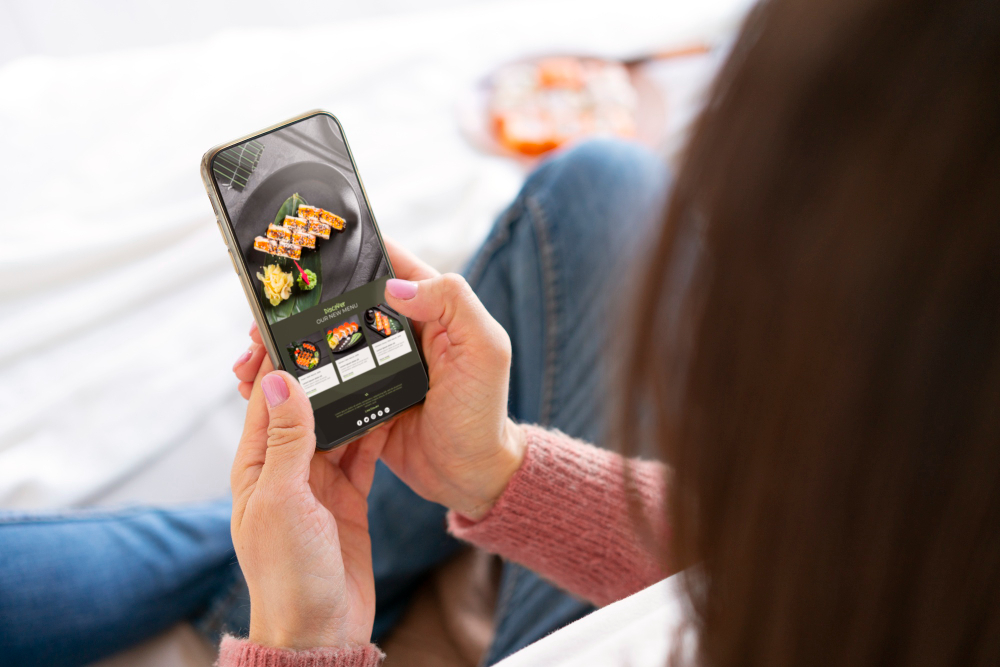
Why Digital Menus Have Become Essential for Restaurants in 2026
In 2026, the menu is no longer just an informational tool. It has become a strategic asset, at the intersection of customer experience, design, data, and profitability. With ultra-connected customers, high mobile expectations, and increasing competition, restaurants that still rely on paper or PDF menus are clearly falling behind. The digital menu has now become a must-have standard for modern, ambitious, performance-driven restaurants.
1- Customer behavior has fundamentally changed
Customers in 2026 are naturally mobile-first.
They scan, compare, browse, and decide… in just a few seconds.
Today:
no one zooms in on poorly formatted PDFs anymore,
no one waits for a server to bring the menu,
everyone expects a smooth, fast, and intuitive experience.
Digital menus perfectly match these new habits:
instant access via QR code,
fully optimized for smartphones,
clear, readable, and interactive.
The menu is often the first real point of contact between a customer and your brand.
2- Digital menus directly improve the customer experience
A good digital menu doesn’t just list dishes.
It guides, reassures, and inspires. an interactive menu, a restaurant can:
clearly structure its offerings,
highlight signature dishes,
add engaging descriptions,
showcase photos and products.
The result:
less hesitation,
fewer questions in the dining room,
faster decision-making.
The experience becomes smoother, more modern, and more enjoyable — exactly what customers expect in 2026.
3- Digital menus have become a revenue driver
In 2026, menus are no longer neutral: they directly influence sales.
A well-designed digital menu allows restaurants to:
highlight the most profitable dishes,
promote specials or new items,
analyze the most viewed or liked dishes,
adjust the menu based on real data.
Unlike paper menus, digital menus become a data-driven sales optimization tool.
This is exactly what PixPlat enables with its built-in analytics dashboard.
4- Paper and PDF menus no longer meet modern expectations
The limitations of traditional formats are now obvious:
PDFs that are hard to read on mobile,
no real-time updates,
repeated printing costs,
an outdated brand image.
In 2026, continuing to use a static menu sends the wrong message:
that of a restaurant stuck in the past.
Digital menus, on the other hand, communicate:
modernity,
professionalism,
strong attention to customer experience.
5- Real-time updates are now essential
Between:
price changes,
out-of-stock items,
daily specials,
seasonal menus,
restaurants need instant flexibility.
With a digital menu:
updates take just seconds,
no reprinting,
no errors,
no stress.
No-code platforms like PixPlat allow restaurateurs to stay fully in control, without relying on technical providers.
6- Digital menus strengthen restaurant branding
In 2026, image matters just as much as taste.
A well-designed digital menu:
enhances visual identity,
reinforces positioning (premium, artisanal, modern),
ensures consistency with social media and the website.
PixPlat positions itself as the Canva of digital menus:
premium templates,
full customization,
elegant and professional design.
The menu becomes a true branding tool, not just a functional support.
7- Digital menus are now a standard, not an option
What was innovative yesterday is expected today.
In 2026:
customers expect to scan a QR code,
teams save time,
high-performing restaurants leverage data,
mobile experience is non-negotiable.
Not offering a digital menu creates unnecessary friction in the customer journey.
Conclusion: Digital menus are at the heart of the modern restaurant
Digital menus have become essential because they address all the key challenges of the restaurant industry in 2026:
customer experience,
operational efficiency,
brand image,
commercial performance.
Restaurants that make this shift today gain a clear competitive advantage.
👉 Discover how PixPlat helps you create modern, interactive, data-driven digital menus — with no technical skills required.