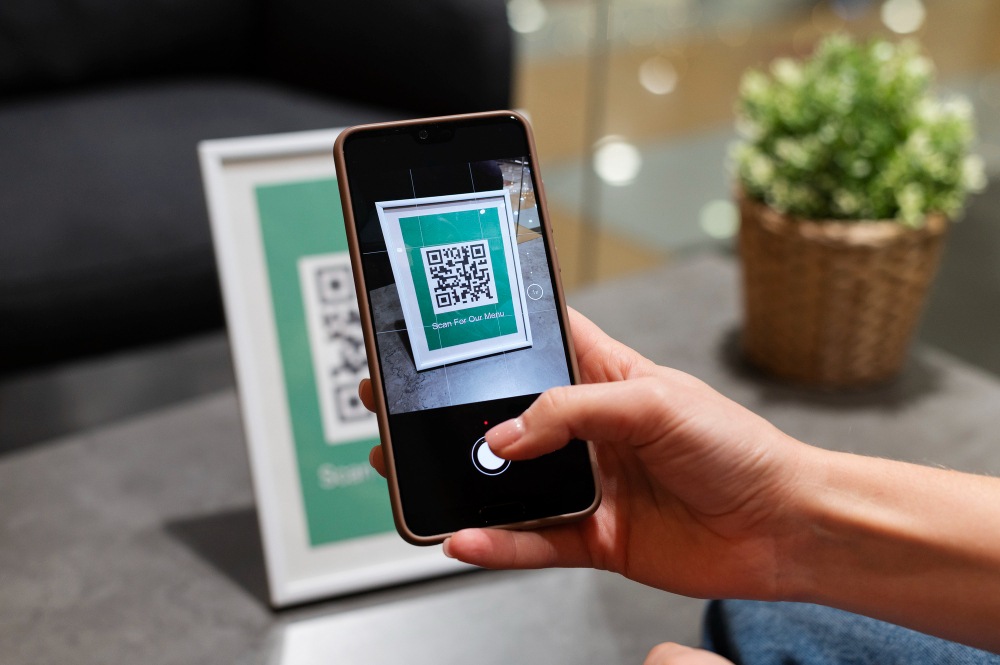
Why Restaurants Are Switching from Paper to Digital Menus
The real reasons restaurants are abandoning paper menus — printing costs, staff pressure, allergen laws, and what the data says about the switch in 2025 and 2026.
Why Restaurants Are Switching from Paper Menus to Digital
Thousands of restaurants still reprint their menus four times a year and consider it a normal cost of doing business. It isn't. It's a choice — and increasingly, a choice that puts them at a disadvantage.
The shift from paper to digital menus is not a technology trend driven by early adopters. It is a financial response to a set of pressures that intensified through 2024 and 2025: rising operating costs, a persistent labour shortage, tightening allergen legislation, and guests who have changed how they interact with restaurants. According to a 2024 survey by the Green Restaurant Association, 70% of restaurants now use digital menus, up from 50% in 2023. Restauranttechnologynews That 20-point jump in a single year does not reflect fashion. It reflects operators doing the maths.
This article explains what is actually driving the switch — and why the restaurants that haven't made it yet are increasingly the exception.
The real cost of paper menus is not what most operators think
Ask a restaurant owner how much they spend on menus and they will give you the print run cost. That is the visible number. The true cost is several times larger.
A 50-table restaurant spends approximately $2,400 to $4,800 annually on menu printing alone — not including rush orders when items run out unexpectedly, which arrive at premium prices. But the print bill is only the beginning.
Consider the complete anatomy of paper menu costs:
Cost category | Annual estimate | Why it's often invisible |
|---|---|---|
Design fees | $500–$2,500 per redesign | Billed separately from printing |
Print runs (seasonal updates) | $500–$2,000 per run × 4 = $2,000–$8,000 | Amortised across the year |
Rush reprints (emergency price changes) | $300–$800 per incident | Treated as a one-off |
Staff time (menu distribution, sanitisation) | 30–45 minutes daily = 180+ hours/year | Labour cost, not "menu cost" |
Lost revenue from outdated listings | Estimated 15–20% missed upsell opportunities | Never appears in any report |
Total annual estimate | $5,000–$10,000+ | Spread across budget lines |
Suggested chart type: stacked bar chart showing the breakdown of true paper menu costs vs. digital menu subscription cost
A restaurant reprinting seasonal menus four times per year at $500 to $2,000 per print run saves $2,000 to $8,000 annually by switching to digital. Evergreen The digital menu subscription cost that replaces all of this typically runs between $150 and $1,500 per year depending on the platform and features. The comparison is not close.
But the financial case goes deeper than the print budget
Paper menus create operational decisions nobody talks about
Here is the real dysfunction that paper menus impose: they make updating your menu expensive, so operators stop updating it as often as they should.
Ingredient prices shift. Supply chains have been unpredictable since 2021. A dish that was profitable in January may barely break even in April if the protein cost has moved. With a paper menu, reflecting that reality means paying for a reprint — so many operators simply absorb the margin loss and wait for the next scheduled print run.
86% of diners feel frustrated when menu items aren't available. Restaurant Business Online That frustration is almost always the result of a printed menu that hasn't caught up with what the kitchen actually has. The gap between what the menu says and what's available erodes trust in a way that guests remember, even if they don't explicitly articulate it.
Digital menus close that gap entirely. An out-of-stock item is removed in thirty seconds. A price increase is live before the next service. A seasonal special appears on the menu the day it enters rotation, not when the next print run is scheduled.
The labour pressure is the accelerant nobody planned for
The financial case for digital menus would be compelling enough on its own. But the labour context in 2025 made the operational case impossible to ignore.
Table-service restaurants remain 233,000 positions below pre-pandemic employment levels. Labour costs have climbed at an unprecedented pace since 2021, pushing many operators to raise menu prices in an effort to maintain profitability. Lra When you're running a dining room with fewer staff than you need, every operational friction point becomes a staffing problem.
The paper menu is a friction point. A server distributing, collecting, sanitising, and replacing menus throughout service is not serving guests. They are handling objects. Self-service options like QR code menus and tableside payments lower server workload and increase efficiency. Digital ordering platforms let restaurants serve more customers without adding front-of-house staff. Restaurant Times
The maths here is straightforward: a server who spends 12 minutes per table handling menus across an eight-table section is spending nearly 20% of their time on a task that delivers zero value to the guest experience. Replace that with a QR code and you give the same server capacity back to hospitality — greeting, suggesting, solving problems, building the relationship that drives repeat visits.
About half of all restaurants (49%) express optimism about technology's role in reducing labour costs. 7shifts QR menus are one of the most accessible entry points into that shift — they require no hardware investment, no POS integration, and no training beyond a five-minute briefing.
Allergen legislation has moved the compliance question from optional to urgent
This driver is the least discussed and among the most consequential for European markets and increasingly for North American ones too.
In the EU, Regulation (EU) No 1169/2011, effective since December 2014, made allergen information mandatory for non-prepacked food, including in restaurants and cafes — the first time legislation explicitly covered restaurant meals, not just packaged food. University of Manchester The regulation requires disclosure of 14 specified allergens across every item served.
In the UK, Natasha's Law extended these requirements further. Non-compliance risks fines of up to $10,000 per incident in the US, or unlimited fines in the UK. Beyond fines, restaurants face lawsuits and reputation damage. In practice, enforcing these requirements through a printed menu is possible but expensive: every ingredient change requires a new print run to keep allergen information current.
A digital menu solves this structurally. Update an ingredient on Tuesday evening; the allergen information on every table is accurate by Wednesday lunch service. There is no reprint, no lag, and no legal exposure from an outdated document.
The same logic applies to nutritional information. From April 2022, large food businesses in England with more than 250 employees are required to display calorie information at the point of choice for customers — which may be a printed or online menu. Menu Guide Digital menus make this compliance continuous and automatic; paper menus make it expensive.
Guest expectations have shifted — and not uniformly
Here is where the picture gets nuanced, and where most articles oversimplify.
The data on guest preferences is genuinely mixed. Customers of all ages prefer print menus over QR codes: 90% versus 74% year-over-year, according to the US Foods Diner Dispatch survey. Even Gen Z has shifted its opinion, with 90% in favour of print compared to only 69% in 2023. Restaurant Business Online
That finding, from a 2024 survey of over 1,000 American diners, is worth taking seriously. It does not mean the switch to digital menus is wrong. It means the switch needs to be implemented correctly.
The restaurants that see the most resistance are those that went QR-only without explanation and removed physical menus entirely. According to Technomic, 66% of diners don't want to pull out their phone when they sit down at a restaurant. Dining out is supposed to be a break from screens. ColorCopiesUSA.com
The restaurants that see the most success are those running a hybrid model: QR code menus as the primary experience, with three to five physical menus available on request and offered proactively to guests who appear hesitant. This approach captures all the operational advantages of digital — real-time updates, cost savings, allergen compliance — without creating friction for the guests who prefer a tactile experience.
78% of respondents favour QR code menus over traditional paper menus according to Eater's survey — but that headline figure hides the key insight, which is that 22% don't. A hybrid model serves both groups simultaneously at minimal extra cost.
The revenue argument: digital menus don't just save money, they make it
The case for switching is strongest when you move beyond cost avoidance to revenue generation.
Digital menus allow immediate price changes, daily specials, and seasonal updates without reprinting costs. High-quality food photography increases order values by 30% on average. Digital menus showcase dishes with vibrant images, detailed menu descriptions, and even video content that printed menus cannot match. The mechanism is not mysterious. When a guest browses a digital menu, they encounter high-resolution photography, dietary badges that help them find relevant options quickly, and algorithmically surfaced upsell prompts at the moment they're making a decision. When a guest holds a printed menu, they encounter text, possibly a few small photographs, and whatever the server remembers to mention.
A 2024 study found that digital menu descriptions accompanied by professional images increase sales by 22%. Ease of use was another factor: optimised templates allow navigating the restaurant digital menu in an average of 15 seconds, and a test on 200 users found that 92% prefer scrolling through high-resolution images rather than reading text lists.
The data on table turnover is equally compelling. Restaurants adopting QR code-based payments experience a 15% increase in table turnover, according to a Square study. Faster tables mean more covers per service — and more covers at the same labour cost means better margin.
The sustainability argument is becoming a business argument
Five years ago, the environmental case for digital menus was a nice-to-have that appealed to a niche audience. In 2025, it is a mainstream purchasing driver.
A 2025 survey by Digital Signage Today found that 73% of diners consider a restaurant's sustainability efforts when choosing where to eat. A restaurant that prints and discards several hundred menus per year is making a visible statement about its environmental values — or lack of them.
The average restaurant throws away 500 to 1,000 menus yearly. That volume of paper waste, laminate, and ink is entirely eliminated by a digital menu. The switch costs nothing in sustainability credibility — it's a free signal that aligns with what a growing majority of guests now factor into their choice of where to eat

What the switch actually looks like in practice
The restaurants that have switched successfully share a common approach: they didn't try to boil the ocean.
They started with a display-only digital menu — guests scan, browse, and order through a server as normal. They kept a handful of physical menus available for guests who wanted them. They briefed their team in fifteen minutes. They published their first QR menu in a single session on PixPlat's drag-and-drop editor, generated the QR code, and put a table tent on every table before the next lunch service.
The initial investment was under an hour of time and the cost of a monthly subscription. The operational savings — in printing, in staff time, in emergency reprints avoided — paid for it within the first month.
→ For the practical step-by-step process, see How to create an online restaurant menu: step-by-step → For how QR code menus work technically, see QR code menu for restaurants: how it works and how to set it up
→ For the complete case for digital menus, see The complete guide to digital menus for restaurants
Frequently asked questions
Are digital menus really better than paper menus for all restaurants? For most, yes — but format matters as much as the decision itself. A digital menu that loads slowly, looks generic, or forces guests to download an app creates more friction than a well-designed paper menu. The advantage of digital is only realised when the execution is good: fast loading, mobile-optimised, branded, and updated regularly. Done well, digital menus outperform paper on cost, operational flexibility, and revenue per cover. Done poorly, they create guest frustration.
What does the research say about guest preferences for digital vs. paper menus? It is genuinely mixed, and context-dependent. A 2024 US Foods survey of 1,000+ diners found 90% prefer print menus overall. Restaurant Business Online At the same time, an Eater survey found 78% favour QR code menus over paper. The difference comes down to methodology, geography, and — most importantly — how well the digital experience is executed. The restaurants reporting the strongest guest satisfaction scores with digital menus are those running hybrids: QR as primary, physical available on request.
How much do restaurants actually save by switching to digital menus? Savings depend heavily on how often the restaurant reprints. Most restaurants discover they're spending $5,000 to $10,000 annually on paper menu-related expenses when all costs are counted. A digital menu subscription from PixPlat starts at €12 per month — approximately $150 per year — and eliminates all print runs, design fees for updates, and sanitisation labour. For most restaurants, the switch pays for itself within the first quarter.
Do digital menus work for fine dining restaurants? Yes, but typically in a hybrid model. Fine dining restaurants rarely go QR-only — the physical menu is part of the ceremony of the experience. Instead, they use a printed card for the core menu and a QR code that carries allergen detail, wine pairing suggestions, tasting notes, and chef's commentary. The paper handles the ritual; the digital handles the information depth that paper can never match.